

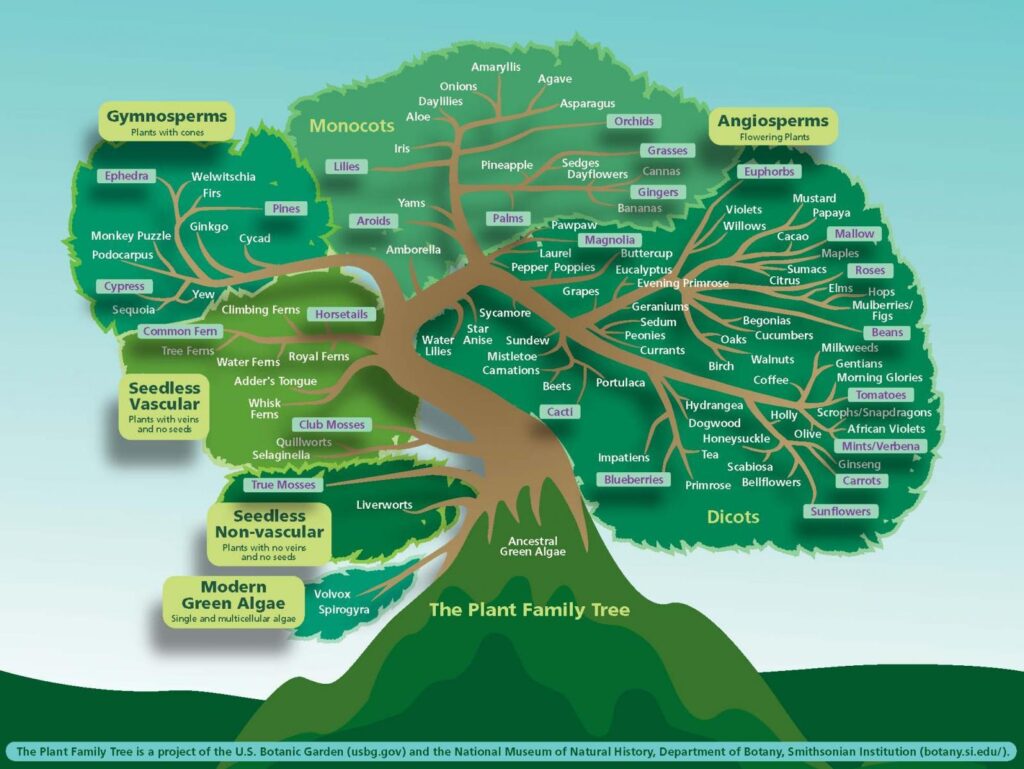
Plant Taxonomy Explained for Beginners
Plant taxonomy is the branch of botany that identifies, names, classifies, and organizes plants based on their characteristics and evolutionary relationships. It helps scientists, students, gardeners, and farmers understand how different plants are related and provides a universal system for identifying them. What Is Plant Taxonomy? Plant taxonomy is the science of: For example, a mango tree is scientifically classified as Mangifera indica, allowing botanists worldwide to identify it without confusion. Why Is Plant Taxonomy Important? Plant taxonomy helps to: The Hierarchy of Plant Classification Plants are grouped from broad categories to specific ones. Rank Purpose Example (Mango) Kingdom Largest group Plantae Division (Phylum) Groups plants with similar structures Magnoliophyta Class Similar divisions Magnoliopsida Order Related plant families Sapindales Family Related genera Anacardiaceae Genus Closely related species Mangifera Species Individual plant type Mangifera indica A simple way to remember the order is: Kingdom → Division → Class → Order → Family → Genus → Species Understanding Each Taxonomic Rank 1. Kingdom The broadest category. All plants belong to the Kingdom Plantae. 2. Division Plants are grouped by major characteristics, such as whether they produce flowers or seeds. 3. Class A subdivision of a division that groups plants with additional shared features. 4. Order Orders contain one or more related plant families. 5. Family Plants in the same family share many structural similarities. Examples: 6. Genus A genus contains species that are very closely related. Example: 7. Species The most specific rank. Members of a species can naturally reproduce with one another. Example: Example of Plant Taxonomy Mango Rank Classification Kingdom Plantae Division Magnoliophyta Class Magnoliopsida Order Sapindales Family Anacardiaceae Genus Mangifera Species Mangifera indica Common Plant Families 4 Family Example Plants Rosaceae Rose, Apple, Strawberry Fabaceae Pea, Bean, Soybean Poaceae Rice, Wheat, Maize Solanaceae Tomato, Potato, Eggplant Asteraceae Sunflower, Daisy Identification vs Classification vs Nomenclature These three terms are closely related but have different meanings: Modern Plant Taxonomy Earlier classifications relied mainly on visible features such as leaves, flowers, fruits, and seeds. Today, botanists also use: These methods provide a more accurate picture of how plants are related. Branches of Plant Taxonomy Benefits of Learning Plant Taxonomy Tips for Beginners Frequently Asked Questions What is the difference between taxonomy and classification?Taxonomy is the science of identifying, naming, and classifying organisms. Classification is one part of taxonomy that focuses on arranging organisms into groups. Why do plants have scientific names?Scientific names provide a single, internationally recognized name for each species, avoiding confusion caused by different common names. Who developed the modern system of plant naming?The Swedish botanist Carl Linnaeus introduced the modern system of binomial nomenclature, which remains the foundation of scientific naming today. Conclusion Plant taxonomy is the foundation of botany. By organizing plants into a clear hierarchy—from Kingdom down to Species—it helps us identify plants accurately, understand their evolutionary relationships, and communicate about them consistently across the world. For beginners, mastering the classification hierarchy and learning common plant families is the best first step toward understanding the diversity of the plant kingdom.